



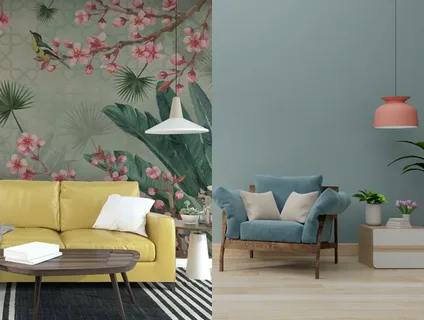
When it comes to transforming your interior spaces, few decisions have as much impact as choosing between wallpaper and paint. Both options offer unique advantages and can dramatically change the look and feel of any room. Whether you’re renovating your entire home or simply refreshing a single space, understanding the differences between these two popular wall covering options will help you make an informed decision that suits your style, budget, and lifestyle.
Understanding the Basics: Paint vs Wallpaper
Before diving into the specifics, it’s essential to understand what each option brings to the table. Paint has been the go-to choice for wall decoration for centuries, offering simplicity, versatility, and ease of application. Wallpaper, on the other hand, has evolved significantly from its historical roots, now available in countless textures, patterns, and materials that can create stunning visual effects impossible to achieve with paint alone.
The choice between these two options isn’t always straightforward. Each has its place in interior design, and the best choice often depends on your specific circumstances, aesthetic preferences, and practical considerations.
The Case for Paint: Advantages and Benefits
Versatility and Simplicity
Paint remains one of the most popular choices for wall covering, and for good reason. The sheer variety of colours available is virtually limitless, with most paint manufacturers offering thousands of shades and the ability to custom-mix colours to match your exact vision. Whether you’re looking for a subtle neutral or a bold statement colour, paint can deliver.
Cost-Effectiveness
Generally speaking, paint is the more budget-friendly option, especially when covering large areas. A gallon of quality paint can cover approximately 350-400 square feet, making it economical for whole-house projects. The materials needed are minimal – paint, primer, brushes, rollers, and tape – and many homeowners feel comfortable tackling painting projects themselves, saving on labour costs.
Easy Maintenance and Updates
One of paint’s greatest advantages is its flexibility. Tired of your current colour? Simply paint over it. Most painted walls can be refreshed with a new coat in a day or weekend, making it ideal for those who like to change their decor regularly. Touch-ups are also straightforward – keep some leftover paint, and you can easily cover scuffs, marks, or damage.
Better for Imperfect Walls (Sometimes)
While smooth walls are ideal for any finish, certain paint techniques and finishes can actually help minimize the appearance of minor wall imperfections. Flat or matte finishes, in particular, are forgiving and can hide small flaws better than glossier alternatives.
The Case for Wallpaper: Advantages and Benefits
Unmatched Pattern and Texture Options
Wallpaper’s greatest strength lies in its ability to introduce complex patterns, textures, and visual depth that paint simply cannot replicate. From intricate florals and geometric patterns to textured grasscloth and metallic finishes, wallpaper offers design possibilities that can serve as the focal point of any room.
Durability and Longevity
High-quality wallpaper, when properly installed, can last 10–15 years or even longer. Modern wallpapers are often washable and highly durable, making them resistant to wear and tear. This longevity can actually make wallpaper more cost-effective over time, despite higher initial costs.
Hiding Wall Imperfections
Thick, textured wallpapers excel at concealing wall imperfections, cracks, and uneven surfaces. If your walls have seen better days, wallpaper can provide a fresh, smooth appearance without extensive wall preparation or repair work.
Adding Value and Luxury
Wallpaper can add a sense of luxury and sophistication to a space that’s difficult to achieve with paint alone. Designer wallpapers with unique patterns or materials like silk, linen, or metallic finishes can elevate a room’s aesthetic and potentially increase property value.
Practical Considerations: Making Your Decision
Installation Complexity and Time
Paint installation is relatively straightforward. Most rooms can be painted in one to two days, including prep work and drying time. While proper technique is important for a professional finish, many homeowners successfully complete painting projects themselves.
Wallpaper installation, however, is more complex and time-consuming. It requires precise measuring, cutting, pattern matching, and careful application to avoid bubbles and misalignment. While peel-and-stick options have simplified the process, traditional wallpaper often benefits from professional installation to ensure the best results.
Room-Specific Recommendations
Bathrooms and Kitchens: These high-moisture areas traditionally favoured paint due to humidity concerns. However, modern vinyl and vinyl-coated wallpapers are moisture-resistant and work well in these spaces. Semi-gloss or high-gloss paint also performs excellently in humid environments.
Bedrooms: Both options work beautifully in bedrooms. Paint offers serene, simple backdrops, while wallpaper can create stunning accent walls or completely transform the space with pattern and texture.
Living Rooms: This is where wallpaper often shines, especially for creating feature walls. However, paint’s versatility also makes it a popular choice for frequently updated spaces.
Children’s Rooms: Consider your long-term plans. Paint allows for easy updates as children’s tastes change, but fun, themed wallpapers can create magical spaces. Washable options in both categories are essential.
Maintenance and Cleaning
Painted walls are generally easy to clean, especially when using washable or scrubbable paint finishes. Most marks can be wiped away with a damp cloth, and touch-ups are simple.
Modern wallpapers, particularly vinyl varieties, are also designed to be washable. However, damaged wallpaper typically requires more extensive repair, often involving replacing entire strips rather than simple touch-ups.
Removal and Replacement
Paint removal isn’t usually necessary unless you’re dealing with many layers or damaged paint. New paint can typically be applied directly over existing paint after light sanding and priming.
Wallpaper removal can be labour-intensive, especially with older wallpapers. Modern peelable wallpapers have improved this situation considerably, but removal still generally requires more effort than painting over existing paint.
Cost Comparison: Initial Investment and Long-Term Value
Professional painting and wallpaper installation costs are different for every city or areas and cannot compare here.
However, wallpaper’s longevity means you might not need to redecorate for 10–15 years, while painted rooms often need refreshing every 3-5 years.
Combining Both: The Best of Both Worlds
You don’t have to choose exclusively between paint and wallpaper. Many successful design schemes incorporate both:
- Accent Walls: Use wallpaper on one feature wall and paint the remaining walls in a complementary colour
- Architectural Highlighting: Wallpaper in alcoves or on ceiling features, with painted walls
- Upper and Lower Wall Division: Traditional wainscoting with paint below and wallpaper above, or vice versa
This approach allows you to enjoy wallpaper’s visual impact while keeping costs manageable and maintaining flexibility.
Expert Guidance: Consulting Professional Decorators
While researching and planning are important, nothing replaces the value of professional advice tailored to your specific space. Every property is unique, with its own architectural features, lighting conditions, and challenges that can significantly impact how paint or wallpaper will perform and appear.
Why Consult TM Decorating?
TM Decorating brings years of professional experience in both painting and wallpapering projects. Their expert decorators can visit your property, assess your walls’ condition, discuss your design vision, and provide honest recommendations based on what will work best for your specific situation.
The professionals at TM Decorating understand that choosing between wallpaper and paint involves more than just aesthetics. They consider factors like:
- Your wall condition and necessary preparation
- Your lifestyle and maintenance preferences
- Your budget and long-term plans
- The room’s purpose and traffic levels
- Lighting conditions and room dimensions
By consulting TM Decorating, you’ll receive personalized advice that accounts for all these factors, helping you avoid costly mistakes and achieve the beautiful, lasting results you deserve. Their team can also provide accurate quotes for both options, making your decision-making process more straightforward.
Whether you ultimately choose painting, wallpapering, or a combination of both, having professional execution ensures the finish will be flawless and durable. Contact TM Decorating today for a consultation that will set your project on the path to success.
Environmental Considerations
For eco-conscious homeowners, both options now offer environmentally friendly alternatives. Low-VOC (Volatile Organic Compounds) and zero-VOC paints minimize harmful emissions, improving indoor air quality. Many paint manufacturers also offer products made from natural or recycled materials.
Wallpaper has also evolved, with options now available made from sustainable materials like recycled paper, natural fibres, and water-based inks. Some wallpapers are even biodegradable, reducing environmental impact at the end of their lifecycle.
Making Your Final Decision
Choosing between wallpaper and paint ultimately depends on your personal circumstances. Consider paint if you:
- Want the most budget-friendly option
- Prefer simple, changeable designs
- Like to update your decor frequently
- Feel confident in DIY application
- Need a quick turnaround
Choose wallpaper if you:
- Want distinctive patterns or textures
- Desire long-lasting results
- Need to hide wall imperfections
- Want to create a luxurious atmosphere
- Don’t plan to redecorate frequently
FAQ
Q1: Can I install wallpaper over painted walls?
A: Yes, you can install wallpaper over painted walls, provided the paint is in good condition. The surface should be clean, smooth, and free from gloss. Lightly sanding glossy paint and applying a primer/sizing product will help the wallpaper adhere properly. However, loose, peeling, or damaged paint should be removed first.
Q2: How long does paint typically last compared to wallpaper?
A: Quality paint typically lasts 5–10 years before showing wear or requiring refreshing, though this varies based on wall traffic, cleaning frequency, and exposure to sunlight. Wallpaper generally lasts 10-15 years or longer when properly installed and maintained. High-traffic areas may require more frequent updates for both options.
Q3: Is wallpaper really more difficult to remove than people think?
A: It depends on the wallpaper type. Modern strippable and peelable wallpapers are designed to remove easily, often coming off in full sheets with minimal effort. Traditional wallpapers or those that have been painted over can be challenging to remove and may require steaming, special solutions, and significant time investment. Always ask about removal difficulty when selecting wallpaper.
Q4: Can I use wallpaper in a bathroom or kitchen?
A: Absolutely! Modern vinyl, vinyl-coated, and specially treated wallpapers are designed for high-moisture environments. Look for wallpapers specifically labelled as suitable for bathrooms and kitchens. These are moisture-resistant and washable. Ensure proper ventilation in these rooms to prevent moisture accumulation behind the wallpaper.
Q5: What’s more durable in homes with children or pets?
A: Both can be durable with the right choices. For paint, choose scrubbable, washable finishes in satin or semi-gloss. For wallpaper, select vinyl or vinyl-coated options that can withstand cleaning and resist damage. Washable wallpaper is particularly good at resisting stains and can be more durable than paint in high-traffic areas, but paint is easier to touch up when damage occurs.
Q6: Can I achieve a textured look with paint instead of using textured wallpaper?
A: Yes, several techniques can create texture with paint. Options include textured paint products, Venetian plaster, rag rolling, sponging, and stencilling. However, these techniques require skill to execute well and may not achieve the same depth and consistency as textured wallpaper. For highly defined textures like grasscloth or fabric appearances, wallpaper is typically superior.
Q7: Which option is better for increasing home resale value?
A: This depends on execution and buyer preferences. Professionally painted homes in neutral colours appeal to the broadest range of buyers and are considered safe investments. High-quality wallpaper in classic patterns can add luxury and distinction, potentially increasing value, but bold or dated patterns might deter buyers. For resale purposes, neutral paint in main areas with perhaps sophisticated wallpaper in powder rooms or dining rooms often strikes the best balance.
Conclusion
Both wallpaper and paint offer unique advantages for transforming your space. Paint provides flexibility, affordability, and simplicity, while wallpaper delivers pattern, texture, and lasting durability. By carefully considering your budget, lifestyle, design preferences, and the specific needs of each room, you can make the choice that’s right for your home.
Remember, you don’t have to navigate this decision alone. Professional decorators like those at TM Decorating can provide invaluable guidance, ensuring your choice results in a beautiful, functional space you’ll love for years to come. Whatever you choose, proper preparation and quality installation—whether DIY or professional—are key to achieving stunning, lasting results.