



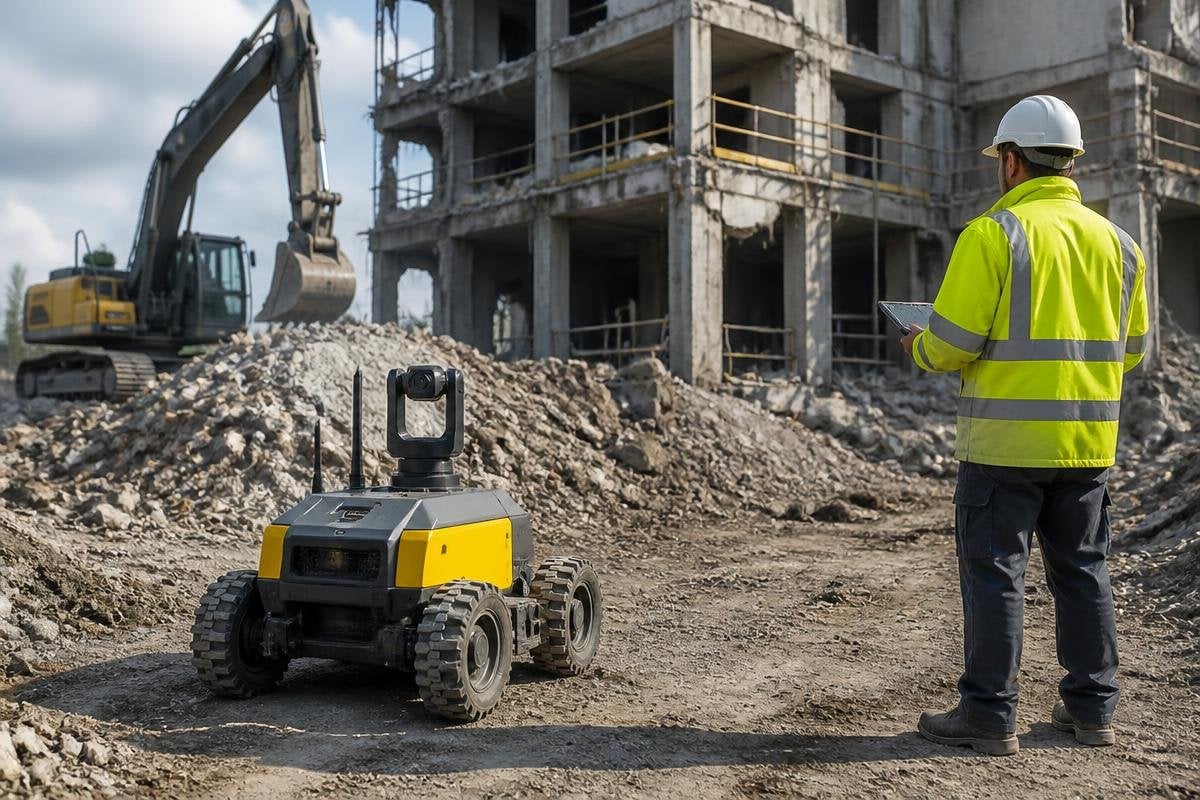
Construction sites change by the hour. Materials move, ground conditions shift, and people work near heavy machines. Robotics could reduce some of that exposure by taking on repeatable tasks, checking risky areas, and giving crews better information before work starts.
- Robots can inspect places that are unsafe or hard to reach.
- Autonomous systems can move materials while keeping people away from traffic routes.
- Human workers still need to plan, supervise, and handle tasks that need judgment.
Where robots can reduce exposure
A construction robot is most useful when the task is dull, repetitive, or physically risky. A machine may carry materials across a site, scan a structure, cut a surface, or remove debris while workers stay outside the work zone.
That change matters because safety often depends on distance and control. If a worker does not need to stand beside a moving load or enter a damaged area, one source of risk is removed from the job. The robot still needs a safe route, a clear work area, and a person who can stop it.
Remote operation can help in places with unstable ground, poor air quality, or a risk of falling material. The operator may work from a safer position while cameras and other sensors provide a view of the task. The quality of that view matters. Dust, glare, rain, and blocked sight lines can reduce what the operator can see.
Inspection before people enter
Robots with cameras, LiDAR, or other sensors can inspect a site and collect images or distance measurements. LiDAR uses laser pulses to measure the shape and position of nearby objects. That information can help a crew check a space before sending people inside.
Inspection machines may look for blocked paths, loose material, standing water, damaged surfaces, or changes in a structure. A robot cannot decide the full safety condition on its own, though. A qualified person still needs to review the findings and connect them to the work plan.
That first check can keep a worker out of a space where loose material or standing water may cause a fall. Robot24 reports on inspection robots and autonomous systems, giving you named machines, site tasks, and test results to compare before a contractor sends one into active work.
Moving loads and working at height
Material handling creates another possible use. A robot may move tools, panels, or waste between set points, which can reduce trips through busy parts of a site. The safety gain depends on the route, the load limit, and how well the system detects people and objects.
Work at height brings a different set of limits. A robotic system may perform a fixed task on a wall, ceiling, or facade, but it still needs secure placement and a plan for power loss or sensor failure. A machine that stops safely is easier to manage than one that keeps moving after losing contact with its operator.
The work also has to suit the robot. Uneven ground, temporary stairs, loose cables, and changing layouts can defeat systems built for clean test areas. Construction sites rarely stay clean for long.
What still needs a person
Robots can follow programmed paths and react to sensor input. They have a harder time with unusual conditions, unclear instructions, and sudden changes made by another crew. A human must set the work boundary, check the machine, and decide when the task should stop.
Training matters too. Workers need to know where the robot may move, how to use its stop control, and what to do after a fault. A robot added without a clear handoff can create new risks around people who did not expect it to be there.
I’d use robotics first for exposure-heavy tasks with clear limits, rather than placing a machine into a busy site without a defined job.
A practical site check
Before adding a robot to a construction task, check these points:
- Name the hazard: identify the worker exposure the machine should reduce.
- Set the boundary: mark where the robot can move and where people must stay.
- Check the ground: inspect slopes, gaps, debris, cables, and wet areas.
- Test the stop plan: confirm who can stop the system and what happens next.
- Review the handoff: decide when a person takes control or checks the result.
This process keeps the safety case tied to a real task. It also gives the crew a way to judge whether the robot helped, caused delays, or added work around the machine.
The next step is careful deployment in one controlled area, with the crew recording stops, faults, blocked routes, and injuries or near misses. If the robot cannot reduce exposure without creating equal risks around its path, the safer choice is to change the task or leave the robot out.