



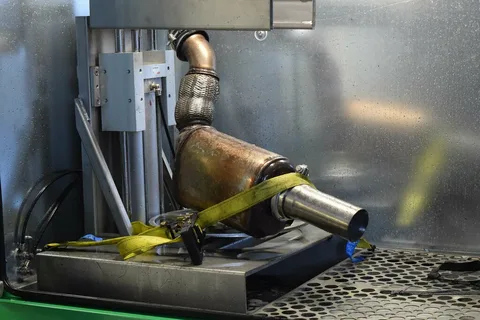
Owning a modern diesel vehicle comes with many advantages — excellent fuel economy, impressive torque, and long-term reliability. However, one of the most common and frustrating issues diesel owners face today is a clogged Diesel Particulate Filter (DPF). When the DPF warning light appears on your dashboard, most drivers immediately wonder two things:
- How much is DPF cleaning cost going to hurt my wallet?
- Where can I find reliable DPF cleaning services that won’t overcharge or damage my vehicle?
This in-depth guide covers everything you need to know about DPF cleaning in 2025, including real-world pricing across the UK, USA, Europe and Australia, the different cleaning methods available, warning signs of a blocked DPF, and how to choose the best service provider.
What is a DPF and Why Does It Get Blocked?
The Diesel Particulate Filter (DPF) is an emissions control device fitted to almost all diesel vehicles manufactured after 2009 (Euro 5 and Euro 6 standards). Its job is to trap soot (particulate matter) from the exhaust gases before they exit the tailpipe, significantly reducing harmful emissions.
During normal driving — especially long motorway journeys — the engine reaches high enough temperatures to trigger “passive regeneration”, where the soot burns off naturally. However, if you mostly drive short trips or in stop-start city traffic, the DPF never gets hot enough to regenerate, and it eventually becomes clogged.
A blocked DPF triggers:
- The DPF warning light on the dashboard
- Limp mode (reduced power)
- Increased fuel consumption
- Excessive black smoke
- Failed MOT (in the UK) or emissions test
At this point, you have three options: clean the DPF, force a regeneration, or replace it entirely (replacement often costs £1,000–£3,500 / $1,300–$4,500).
DPF Cleaning Cost in 2025 – Breakdown by Country and Method
United Kingdom
| Cleaning Method | Average Cost (2025) | Typical Turnaround | Success Rate |
| On-vehicle forced regeneration | £100 – £250 | 1–2 hours | 50–70% |
| Off-vehicle ultrasonic cleaning | £250 – £450 | 24–48 hours | 90–95% |
| Thermal (oven) cleaning | £300 – £550 | 48 hours | 92–97% |
| DPF + catalyst combined cleaning | £400 – £750 | 48–72 hours | 95%+ |
United States
| Method | Average Cost | Notes |
| Dealer forced regeneration | $150 – $400 | Often requires diagnostic fees |
| Independent shop cleaning | $300 – $650 | Ultrasonic or thermal |
| Mail-in professional cleaning | $450 – $850 + shipping | Terraclean, FSX, DPF Alternatives |
Australia
| Method | Average Cost (AUD) |
| Forced regeneration | $150 – $350 |
| Professional off-vehicle cleaning | $550 – $950 |
| New DPF replacement | $2,000 – $5,000+ |
Europe (Germany, France, Spain)
Professional cleaning typically ranges from €300 to €750 depending on whether the vehicle is a passenger car or light commercial van.
Types of Professional DPF Cleaning Services Explained
1. On-Vehicle Forced Regeneration
A technician uses diagnostic equipment to command the engine to perform an active regeneration cycle while the vehicle is stationary or being driven under specific conditions.
Pros: Cheapest option, quick
Cons: Only works if the DPF is less than ~60–70% blocked. Repeated forced regenerations can damage the filter long-term.
2. Off-Vehicle Ultrasonic + Pulsed Air Cleaning (Most Popular)
The DPF is removed, placed in an ultrasonic tank with special cleaning fluid, then dried and blown out with high-pressure pulsed air.
Pros: Extremely high success rate, restores flow to near-new levels
Cons: Requires removal (adds labour cost), 24–48 hour turnaround
3. Thermal (Bake & Blow) Cleaning
The filter is baked at 600–650°C in a specialist oven to burn off soot, then blown out.
Pros: Excellent for heavily carbonised filters
Cons: Slightly higher risk of cracking ceramic substrate if not done correctly
4. Chemical “Pour-In” Additives & On-Road Cleaning
Some workshops offer a cheaper chemical flush where additive is poured into the filter via the temperature/pressure sensor port.
Pros: Low cost (£80–£150)
Cons: Variable results, can leave residue, not recommended by most OEMs
5. Mail-In DPF Cleaning Services
Popular in the USA and increasingly in the UK. You remove the DPF, ship it to a specialist, and get it back cleaned and flow-tested within a week.
Examples: DPF Alternatives, FSX, CleanDiesel, DPF Centre (UK)
How to Choose a Reputable DPF Cleaning Service
Look for these key indicators:
- Pre- and post-cleaning flow test reports (should show >90–95% of original flow)
- Written warranty (6–24 months is common)
- Use of OEM-approved methods (no harsh acids that destroy the precious metal coating)
- Transparent pricing with no hidden “inspection fees” if un-cleanable”
- Reviews specifically mentioning successful cleaning (not just “fast service”)
Red flags:
- “We guarantee to clean any DPF” (impossible — some are mechanically damaged)
- Prices that seem too good to be true (£99 “DPF clean”)
- No flow bench or test data provided after cleaning
DIY DPF Cleaning – Is It Worth the Risk?
You’ll find countless YouTube videos showing people cleaning DPFs with oven cleaner, pressure washers, or even barbecues. While some succeed, many end up with cracked substrates or destroyed catalytic coatings, leading to an expensive replacement anyway.
Professional cleaning is almost always cheaper than replacement, and DIY attempts often void any remaining warranty.
Preventing Future DPF Problems
- Take a 30–40 minute motorway drive at least once every couple of weeks
- Use premium diesel when possible (lower sulphur, better cetane)
- Avoid repeated short journeys are the #1 cause of DPF blockage
- Consider an occasional Italian tune-up (high-RPM driving on a clear road)
- Have any engine faults (EGR, injectors, turbo) repaired promptly — they increase soot production
Conclusion
The average DPF cleaning cost in 2025 ranges from £100 for a simple forced regeneration to £550+ for a full professional off-vehicle clean — still a fraction of the £1,500–£3,500 a new filter costs.
Investing in proper DPF cleaning services from a reputable specialist will not only save you money in the short term, but also extend the life of your diesel vehicle and keep you legal on emissions.
If your DPF warning light is on right now, don’t ignore it hoping it will go away. Book a diagnostic and cleaning as soon as possible — the longer you leave it, the more likely you’ll be forced into an expensive replacement.
