



Cyprus is often called the Island of Aphrodite — the birthplace of the Greek goddess of love. But long before mythology wrapped the island in romance, Cyprus was already cultivating something equally powerful: a culinary identity shaped by geography, trade, conquest, and community.
To understand Cypriot food is to understand Cyprus itself — an island positioned at the crossroads of Europe, Asia, and Africa. For thousands of years, merchants, empires, and settlers passed through its ports, leaving behind spices, techniques, ingredients, and traditions that slowly wove themselves into the island’s kitchens. What emerged is a cuisine that is unmistakably Greek in heart, yet layered with Middle Eastern warmth and Mediterranean simplicity.
Ancient Beginnings: Bread, Olives, and Wine
The foundations of Cypriot cuisine were laid in antiquity. Archaeological evidence shows that as early as 8,000 BC, inhabitants cultivated grains and raised livestock. Wheat and barley became staples, forming the basis of bread — still central to every Cypriot meal today.
Olive trees flourished in the island’s climate, and olive oil became more than an ingredient; it became a symbol of prosperity and health. Wine production also dates back thousands of years. In fact, Cyprus is home to Commandaria, one of the world’s oldest named wines still in production.
These three pillars — bread, olive oil, and wine — remain central to Cypriot dining culture. Sit at any table on the island today, and you will find their ancient legacy present.
Greek Influence: Structure and Tradition
Cyprus’s deep ties to Greece shaped much of its culinary backbone. Dishes like moussaka, souvlaki, dolmades (stuffed vine leaves), and loukoumades reflect shared Hellenic roots.
The Greek philosophy of hospitality — philoxenia — also shaped the island’s food culture. Meals were meant to be generous and shared. No guest should leave hungry. This belief remains deeply embedded in Cypriot households, where visitors are often greeted first with coffee and something sweet.
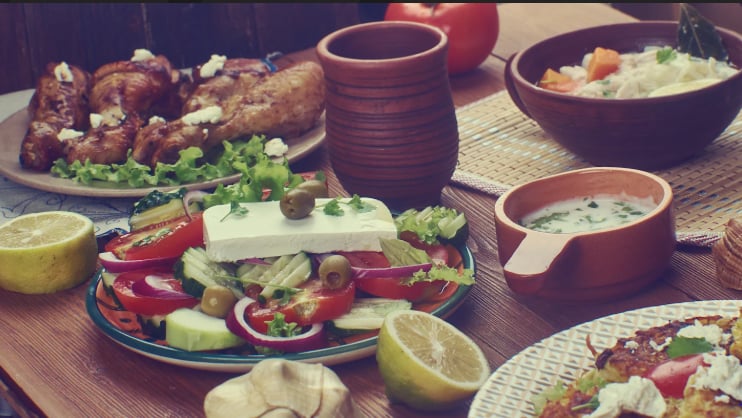
The concept of meze — a succession of small dishes served over hours — reflects this communal spirit. It is not merely a meal but an experience, encouraging conversation and connection.
Middle Eastern and Ottoman Imprints
Cyprus was ruled by the Ottoman Empire for over three centuries, and the influence is unmistakable in the kitchen. Spices such as cumin and cinnamon became more common in savoury dishes. Slow-cooked meats, rich stews, and syrup-soaked desserts like baklava gained prominence.
Techniques such as wrapping meat in caul fat (as seen in sheftalia) and cooking dishes in sealed ovens evolved during these centuries. Even halloumi — now globally associated with Cyprus — has roots that stretch back through medieval and Ottoman periods.
This blending of Greek and Middle Eastern elements created a cuisine that feels both familiar and intriguingly different. It is Mediterranean, but with a distinctive warmth and spice.
Venetian and British Touches
Cyprus’s culinary story does not stop there. Venetian rule in the late Middle Ages introduced new ingredients and influences from Italy, particularly in the use of pasta and certain baking techniques.
Later, British colonial rule in the 19th and 20th centuries added subtle shifts to dining habits. Afternoon tea culture, certain baked goods, and even breakfast styles evolved during this time. While these influences are less dominant than Greek or Ottoman ones, they remain part of the island’s layered culinary identity.
The Village Kitchen: Preserving Tradition
For much of Cyprus’s history, life revolved around agriculture. Villages were largely self-sufficient. Families grew vegetables, produced olive oil, made cheese, and raised livestock.
Seasonality shaped the menu. In spring, wild greens and herbs were gathered from the hills. In summer, tomatoes, cucumbers, and watermelons dominated the table. Autumn brought grape harvests and wine production. Winter was the season of slow-cooked stews and preserved foods.
Kleftiko — lamb slow-cooked in sealed ovens — is a perfect example of rural ingenuity. Its name is linked to mountain fighters who allegedly cooked meat underground to avoid smoke detection. Whether legend or truth, the dish reflects the resourcefulness of Cyprus’s people.
Coastal Abundance: The Sea’s Influence
Being an island, Cyprus has always relied on the sea. Fishing villages developed their own traditions, centred around freshly caught sea bream, red mullet, octopus, and calamari.
The simplicity of preparation — grilling with olive oil and lemon — highlights a long-standing culinary philosophy: respect the ingredient. Let freshness lead.
Today, this connection to the sea remains strong, especially in coastal towns like Larnaca, where visitors can experience both traditional and modern interpretations of Cypriot cuisine. At establishments such as Lordos Beach Hotel, guests can taste Mediterranean and local dishes that reflect the island’s historic blend of land and sea.
Modern Cyprus: Tradition Meets Innovation
In recent decades, Cypriot chefs have begun reimagining traditional dishes with contemporary techniques. Halloumi appears in gourmet salads. Meze plates are refined yet authentic. Classic stews are presented with modern flair.
Yet even as presentation evolves, the soul of the cuisine remains unchanged. It is still about generosity. About flavour built slowly. About recipes passed down through generations.
Food in Cyprus is not static — it is living history. Every bite contains traces of ancient farmers, Byzantine cooks, Ottoman spice traders, and village grandmothers.
A Culinary Reflection of Identity
Cyprus’s history is complex, shaped by waves of influence and resilience. Its cuisine mirrors that journey. It is neither purely Greek nor entirely Middle Eastern. It is something uniquely Cypriot — a harmonious blend born from centuries of exchange.
To eat on Aphrodite’s Island is to taste its story. The sweetness of honeyed pastries, the earthiness of slow-cooked lamb, the brightness of lemon over grilled fish — these are flavours shaped by time.
And perhaps that is why Cypriot food feels so deeply comforting. It carries the memory of the past while welcoming the present.
On this island of myth and sun, history is not confined to museums. It lives in kitchens. It simmers in clay ovens. It is poured into glasses of wine and shared across tables.
And as long as families gather around meze, as long as olive trees continue to bear fruit, the story of Cypriot cuisine will keep unfolding — one delicious chapter at a time.
