



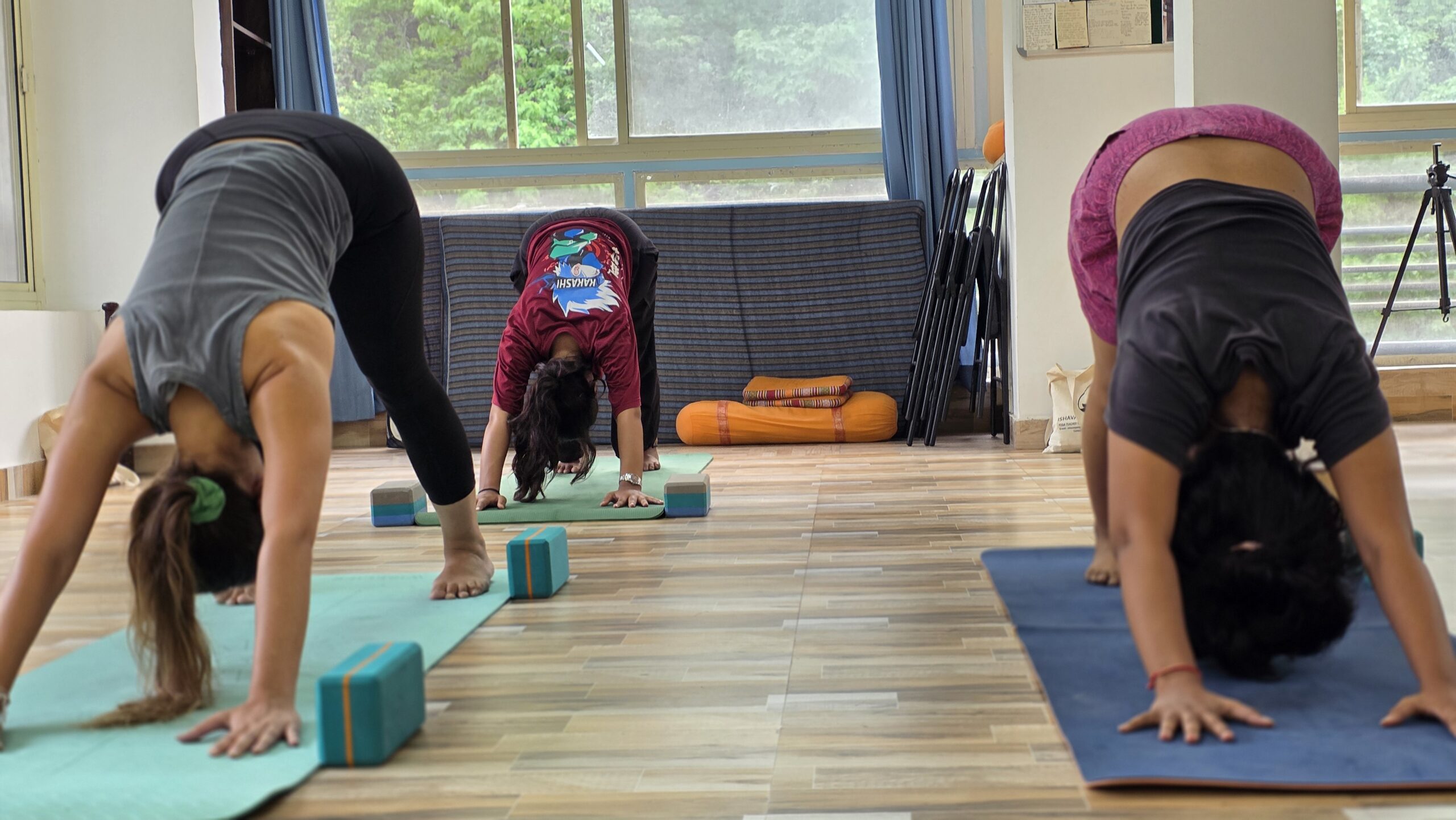
you spread your mat, and breathe deeply, and move into a position. That moment marks when a tremendous change starts. Yoga is not merely a means to touch your toes or have a sweat. It is an all-inclusive framework of integrating your bodily practices with your mind.
The number of people who engage in yoga every day is in the millions, and the motives are much deeper than mere trends. This age-old practice in essence transforms the way your body moves, the way your brain works under stress and the way you relate with the surrounding environment.
In this guide we will actually discuss why yoga is significant to both the physical and the mental clarity. You will know how it develops functional strength, enhances your flexibility, and is an effective tool in mental focus.
The Physical Strength of a Standard Yoga.
Most individuals think that yoga is stretch only. Nevertheless, a regular exercise completely replenishes your physical base after the ground.
Building Functional Strength
Chaturanga, or Warrior II pose is not just making you look good. The weight that you are lifting and supporting is your own body weight. This form of isometric exercise works muscles of stabilization that are usually overlooked in traditional weightlifting.
In yoga, you have to adopt core every time to balance yourself. Consequently, this causes great abdominal strength that keeps your back straight. This work strength is directly transferred into your everyday life. It will become easier to carry the groceries, sit at a desk without backache, and have proper posture during the day.
Moreover, yoga harmonizes muscles. When you run or bike, you have probably good quads and tight hamstrings. Yoga aims at the elimination of these imbalances by making the weaker muscles strong and overworked muscles loose.
Unlocking Flexibility and Mobility
Bending can be seen as one of the most evident advantages of yoga, yet, its significance extends beyond being able to split. With age, muscles also tighten as a natural process and joints decrease their range of movement. This rigidity commonly causes pain, especially on the lower back, hips, and neck.
The yoga relaxes the muscles and the connective tissues around them. With time, it is this regular stretching that makes the fascia longer, providing your joints with greater mobility. The increase in mobility will reduce the chances of injury during other physical activities.
Flexibility is not necessary to begin yoga. Actually, the last thing you should start with is being stiff. As your practice progresses, you will feel a slow process of loosening and as a result you will be able to move your body with a new feeling of ease and fluidity.
Boosting Cardiovascular and Respiratory Health
Though intense forms of yoga, such as Vinyasa or Ashtanga, increase your heartbeat, even slower forms of yoga stimulate your heart. Yoga focuses on controlled breathing, referred to as pranayama.
This deliberate practice of breathing will increase the capacity of your lungs and help in the circulation of oxygen within your body. Improved flow of oxygen implies a smoother functioning of your organs. Moreover, a slow breath activates the vagus nerve, which reduces blood pressure and reduces the resting heart rate.
The Mental Magic of the Mat
The physical gains of yoga are unbelievable, but the changes of the mind tend to make people go back to their mats every year after year.
Cultivating Mental Clarity and Focus
Our minds constantly jump from one thought to the next. We are so concerned about tomorrow, deconstructing the past, and hardly ever in the present. Yoga makes you live in the present moment. You can not think about your grocery list when you keep one leg in Tree Pose, and you will fall.
This mandatoryity of complete attendance is a brain workout. Research indicates that yoga enlarges the grey matter in the brain, especially in parts that deal with self-awareness and concentration. Frequent practitioners usually say that they are much more focused and clear about their decision-making in work and in personal life.
You can give your mind time to arrange itself by making sure you work on the external noise to keep it quiet. You get out of the mat with a renewed vision and are now prepared to face the challenges with a clear and calm mind.
Reducing Stress and Anxiety
Exercise causes the release of endorphins, but yoga takes it a notch higher in combating stress. Mindful movement and deep breathing have a direct effect on your central nervous system.
When you get stressed, your body goes into a fight or flight mode and floods your system with cortisol. Yoga triggers the parasympathetic nervous system or the rest and digest state. This change significantly reduces the amount of cortisol and instills a feeling of utter relaxation.
Yoga is used as an act of movement meditation by many individuals. The stagnated emotions are processed, and the tension in the bodies is relieved with the assistance of the rhythmic movement flow of breathing. Assuming that you have anxiety issues, a slow Yoga session before bedtime can do wonders in terms of increasing the quality of your sleep and reducing your overall stress levels.
Taking Your Practice to the Source
After enjoying these tremendous physical and mental gains, you may get an urge to learn more about the practice. Good instructions are provided by the local studios, but if you go further to understand the history of yoga, it will change all your views.
To a person who desires to experience the traditional teachings to the fullest, an experience at a yoga school in india is unparalleled. Training under the gurus in the yoga motherland enables you to understand the philosophy that surrounds the physical practices in a rich way. You get to know of ancient writings, right posture, and the living habits that can help maintain optimal holistic health.
Practitioners have different preferences. Others would choose a physical exercise, and some seek awakening of the mind and spirit. When you are attracted to the more energetic aspects of breathwork, chanting, and meditation, a kundalini yoga teacher training in india may become your next reasonable choice. Kundalini lays emphasis on the awakening of energy at the base of the spine, and this can be a very transformative experience for your mental and spiritual well-being.
How to Begin Your Journey
You do not require costly equipment or time off to begin reaping the fruits of yoga. Regularity is much more important than intensity or time.
Begin with 15 minutes of simple poses and breathing exercises. Be conscious of what happens in your body, but not the appearance of the poses. Pay attention to your physical boundaries and do not go through acute pain.
With time, you will also want to discover the various types of yoga, and then you will be able to discover what suits you. Restorative yoga is a miracle of stress relief, whereas Power yoga makes one heat up and gain strength.
It is only necessary to start. Get yourself a mat, take a deep breath, and have the practice change your body and mind.