



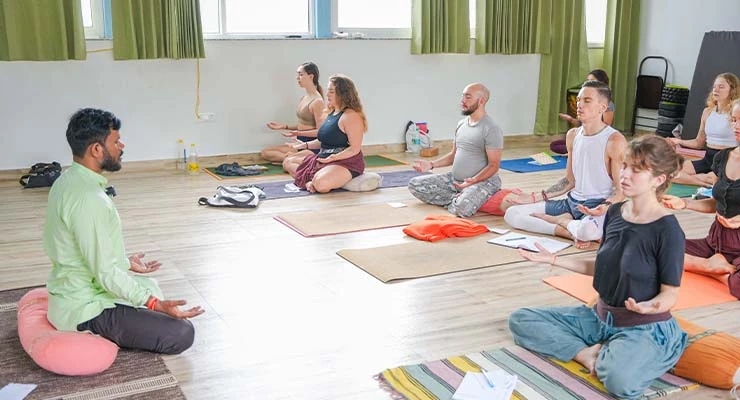
It can seem luxurious to find a peaceful time. To-do lists, anxieties, and an endless barrage of digital noise frequently fill our heads. Anxiety and a sense of disconnection might result from this mental clutter. The good news is that finding peace doesn’t require scheduling a week-long retreat. Yoga provides easy-to-use yet effective methods for promoting mental calmness and long-lasting tranquility.
Seven simple yoga poses that you can simply include into your daily routine will be covered in this book. These methods focus on breath, awareness, and gentle movement to calm your nervous system rather than intricate physical poses. These techniques can assist you in finding calm in the middle of the commotion, regardless of your level of experience.
-
Pranayama, or mindful breathing
Concentrating on the breath is one of the most basic and efficient methods of mental relaxation. Pranayama is the term for the yoga technique of controlling one’s breath. One easy method to begin with is Sama Vritti, or “Equal Breathing.”
How to do it: Sit comfortably with your spine straight, either on a chair or a cushion. Shut your eyes and start observing your breath naturally without altering it. After a few seconds, begin taking slow, four-count breaths. To a count of four, release the breath as slowly as before. For three to five minutes, keep up this pattern.
Your neurological system receives a signal to relax when you just balance your inhale and exhale. It draws your attention away from worried thoughts and outside distractions by anchoring your awareness in the here and now. You can do this exercise before bed, at your desk, or while waiting in line at the supermarket.
-
Mild Stretches for the Neck
Our necks and shoulders carry a surprisingly high level of tension, particularly if we spend a lot of time bent over a phone or computer. Mental stress may be exacerbated by this physical constriction. There may be an instant relaxing impact when you release it.
How to do it: Lower your right ear softly toward your right shoulder while sitting upright. Breathe deeply into the stretch down the left side of your neck and hold it for 30 seconds. Repeat on the left side after slowly moving back to the middle. After that, feel a light stretch along the back of your neck as you bring your chin down to your chest. Hold for thirty seconds. Let gravity do the stretching; don’t push or force it.
-
Marjaryasana-Bitilasana, or Cat-Cow Pose
A fundamental tenet of yoga is the connection between breath and movement, which is achieved through this soft, flowing sequence. It eases back stiffness, warms the spine, and calms the mind.
How to do it: Get on your hands and knees in a tabletop position, placing your knees behind your hips and your wrists beneath your shoulders. Drop your tummy, raise your chest and tailbone, and look forward while you breathe in (Cow Pose). Tuck your chin to your chest, press the mat away, and circle your spine toward the ceiling as you release your breath (Cat Pose). For at least a minute, keep switching between these two positions, timing each motion with an inhale or exhale.
-
Balasana, or Child’s Pose
A resting position that promotes surrender and safety is called Child’s Pose. It calms the mind and gently extends the ankles, hips, and back. When you’re feeling stressed or exhausted, this stance is your go-to one.
How to do it: Spread your knees wide apart and touch your big toes with your hands and knees. With your forehead lying on the mat, fold your torso forward and sit your hips back onto your heels. You can rest your arms with their palms facing up or extend them out in front of you. Shut your eyes and take long breaths into your back, allowing your ribs to expand as you do so. As long as you feel comfortable, stay here.
-
The pose known as “legs up the wall” (Viparita Karani)
Anxiety can be greatly reduced and the nervous system calmed with this restorative position. It relieves sore legs and calms a racing mind by reversing the normal blood flow.
Method: Position a folded blanket or cushion a few inches away from a wall. With one hip on the wall, sit on the floor. Then, as you lie back with your head and shoulders on the floor, swing your legs up the wall. The floor or the cushion may be on your lower back. Place your arms palms up at your sides. Shut your eyes and pay attention to your breathing. Spend five to fifteen minutes in this incredibly calming stance.
-
Savasana (corpse pose)
Savasana may appear to be just lying down, but it’s actually a purposeful relaxation technique. It teaches you to let go of control and just be, which is a potent technique for achieving mental tranquility. It enables the advantages of your practice to be integrated into your body and mind.
The technique is to lie flat on your back with your feet naturally spread wide. With the palms facing up, place your arms a few inches away from your body. Shut your eyes and let go of your breathing control. As you focus on each area of your body, intentionally let go of whatever tension you may be feeling. Let the ground underneath you support you completely and make you feel heavy. Take a minimum of five to ten minutes to relax here.
-
Meditation While Walking
Yoga is not just done on a mat. A simple walking meditation might help you discover tranquility and cultivate mindfulness. This exercise helps you become more aware of your body and your immediate surroundings.
How to do it: Look for a peaceful area where you may take short walks. Start walking slowly and deliberately. Focus entirely on how your feet feel on the ground—the toes, the heel, and the ball of the foot. Align your breathing with your movements; for example, take three breaths and release them after three steps. When your thoughts stray, gently bring them back to the feeling of walking.
Deepening Your Practice
A more tranquil inner world can be accessed through these seven practices. Your mental health can undergo significant changes if you regularly incorporate them into your life. As you advance, you may experience a desire to go further into the practice. Many follow this path in search of authentic yoga in India, the birthplace of these traditions.
Pursuing a yoga teacher training course can be a very fulfilling journey if you feel called to share these life-changing techniques with others. It offers a methodical approach to expanding your own knowledge and developing the abilities to help others discover inner calm.
In conclusion, the first step toward inner peace is now.
Yoga has mental health benefits that don’t require you to twist yourself into a pretzel. Small, regular moments of self-care and silence are the foundation of long-lasting serenity of mind. You can offer yourself the gift of presence, serenity, and a closer bond with yourself by attempting these seven easy exercises.
Pick a practice that you enjoy and give it a try right now. Take note of how it feels to stop rushing and just focus on your body and your breath. The first step to developing a more tranquil and balanced life is this small deed.